
Article Plan: River Flows in You Sheet Music Piano PDF
This article details accessing and mastering Yiruma’s “River Flows in You” piano sheet music, covering free and paid resources, variations,
and technical aspects for pianists of all levels, alongside copyright considerations.
Discover downloadable PDF sheet music and explore arrangements, from beginner-friendly versions to complex interpretations, enhancing your musical journey.

Learn about navigating sheet music, understanding notation, and utilizing software for optimal viewing and editing of this beloved piano piece.
“River Flows in You”, composed by the South Korean pianist Yiruma, has become a modern classic, captivating listeners with its evocative melody and emotional depth. Released in 2001, the piece quickly gained popularity, transcending musical boundaries and resonating with a broad audience. Its accessibility makes it a favorite among aspiring pianists, while its inherent beauty continues to enchant seasoned musicians.
The demand for sheet music reflects the piece’s enduring appeal. Numerous online resources offer downloadable PDF versions, catering to varying skill levels. From simplified arrangements for beginners to intricate transcriptions for advanced players, finding the right sheet music is crucial for a fulfilling learning experience. This article serves as a comprehensive guide, navigating the landscape of “River Flows in You” sheet music, providing insights into resources, variations, and essential playing techniques.

Whether you’re a novice embarking on your piano journey or a proficient player seeking a new challenge, understanding the available options and nuances of the sheet music will unlock the full potential of this beautiful composition.
Yiruma: The Composer
Lee Ru-ma (born February 15, 1978), professionally known as Yiruma, is a South Korean pianist and composer. He gained international recognition with “River Flows in You,” a piece that exemplifies his signature style. Yiruma’s musical journey began with classical training, but he later embraced a more contemporary and accessible approach, blending classical elements with pop sensibilities.
His compositions often feature lyrical melodies, gentle harmonies, and a focus on emotional expression. This unique blend has resonated with audiences worldwide, making his music particularly popular for relaxation, study, and romantic occasions. The widespread availability of sheet music for “River Flows in You” is a testament to his influence and the piece’s enduring appeal.
Yiruma’s ability to connect with listeners on an emotional level is a key factor in his success, and his music continues to inspire pianists of all levels to explore and express themselves through the piano.
Yiruma’s Musical Style
Yiruma’s musical style is characterized by a distinctive blend of classical piano techniques and contemporary new-age influences. His compositions often prioritize melodic beauty and emotional resonance over complex harmonic structures. He frequently employs arpeggiated figures and flowing, lyrical lines, creating a sense of tranquility and introspection.
A hallmark of his work, including “River Flows in You,” is its accessibility. While rooted in classical foundations, his music avoids overly academic or challenging passages, making it approachable for a wide range of pianists. This accessibility contributes to the popularity of his sheet music, as many aspiring musicians can readily learn and perform his pieces.
His style is often described as minimalist, yet deeply expressive, relying on subtle nuances and dynamic variations to convey emotion. This makes his music ideal for both solo performance and background ambiance.
Popularity and Influence
“River Flows in You” has achieved phenomenal global popularity, becoming one of the most recognizable and frequently performed modern piano pieces. Its widespread appeal is fueled by its emotive melody and relatively accessible difficulty level, driving significant demand for its sheet music in PDF format and other arrangements.
The piece’s virality on platforms like YouTube and TikTok has introduced it to new generations of listeners and aspiring pianists. This digital exposure has further cemented its status as a contemporary classic, increasing searches for readily available free sheet music and paid versions.
Yiruma’s influence extends to inspiring countless pianists to explore contemporary classical music. His success demonstrates the power of emotionally resonant melodies and accessible compositions in attracting a broad audience, impacting the landscape of modern piano repertoire.
Understanding Piano Sheet Music
Decoding piano sheet music is crucial for successfully learning “River Flows in You.” Familiarity with basic music notation – including the staff, clef, notes, and rests – is fundamental. Understanding note values (whole, half, quarter, etc.) dictates rhythm, while symbols indicate dynamics and articulation.
Key signatures define the sharps or flats present throughout a piece, influencing the notes played. “River Flows in You” is often found in F-sharp minor or related keys. Time signatures (e.g., 4/4) indicate the number of beats per measure and the note value receiving one beat.
Accurate interpretation of these elements is vital when using PDF sheet music. Recognizing symbols for pedal markings, repeats, and other instructions ensures a faithful and expressive performance of this popular piece.
Basic Music Notation
Essential elements of piano sheet music include the staff – five horizontal lines and four spaces – upon which notes are placed. The treble clef (for higher notes) and bass clef (for lower notes) define pitch. Notes represent musical sounds, with their position on the staff indicating pitch and their shape indicating duration.
Rests denote silence, mirroring note values. Accidentals – sharps (#), flats (♭), and naturals (♮) – alter pitch. Dynamics markings (p for piano, f for forte) indicate volume. Articulation marks like staccato (.) and legato (—) shape phrasing.
When using a “River Flows in You” PDF, recognizing these symbols is key. Understanding their function allows for accurate reading and a more nuanced interpretation of Yiruma’s beautiful composition.
Key Signatures and Time Signatures
Key signatures, found at the beginning of the staff, indicate which notes are consistently sharp or flat throughout a piece. “River Flows in You” is often in Eb Major or a related key, influencing the accidentals present. Understanding the key signature simplifies reading by eliminating repeated sharps or flats.
Time signatures define the rhythmic structure. A common time signature is 4/4 (four-four time), meaning four beats per measure, with a quarter note receiving one beat. This dictates the pulse and grouping of notes.
When examining a “River Flows in You” PDF, note the key and time signatures. These provide crucial context for interpreting the rhythm and harmony, enabling a more accurate and expressive performance of this popular piece.

Finding “River Flows in You” Sheet Music
Locating sheet music for “River Flows in You” is readily achievable online. Numerous websites offer both free and paid options. A quick search reveals readily available PDF versions, though quality can vary significantly.
Free PDF sources often include community-driven transcription sites and online music archives. However, be mindful of copyright restrictions and potential inaccuracies in these transcriptions.
Paid sheet music websites, such as Musicnotes.com and SheetMusicPlus, provide professionally arranged and verified scores. These typically offer higher quality and more accurate representations of the original composition, often with adjustable difficulty levels.
Always preview the sheet music before downloading or purchasing to ensure it suits your skill level and preferences.
Free PDF Sources
Numerous online platforms offer free PDF sheet music for “River Flows in You,” catering to pianists seeking accessible resources. Websites like Musescore.com and IMSLP (International Music Score Library Project) frequently host user-submitted transcriptions.
However, it’s crucial to exercise caution when utilizing these sources. The accuracy of transcriptions can vary, and some may contain errors or omissions. Always compare multiple versions if possible.

Searching directly on Google using terms like “River Flows in You free sheet music PDF” will yield a plethora of results, but discernment is key. Be wary of sites with excessive advertisements or questionable security.
Remember to respect copyright laws and consider supporting composers by purchasing official sheet music when feasible.
Paid Sheet Music Websites
For guaranteed accuracy and high-quality arrangements, several reputable websites offer “River Flows in You” sheet music for purchase. Musicnotes.com and SheetMusicPlus are prominent examples, providing officially licensed scores in various formats, including PDF.
These platforms typically offer different versions – solo piano, simplified arrangements, or even duet options – catering to diverse skill levels and preferences. Purchasing ensures a clean, professionally typeset score, free from errors often found in free transcriptions.
Paid sheet music often includes additional features like adjustable playback speed and transposition options, enhancing the learning experience. Consider these benefits when weighing the cost against free alternatives.
Supporting the composer and publishers through legitimate purchases helps ensure the continued creation of beautiful music.
Sheet Music Variations & Arrangements
“River Flows in You” sheet music exists in a multitude of variations, catering to different piano skill levels and ensemble preferences. Beginner versions simplify the original piece, often omitting complex chords or reducing the rhythmic density.
Intermediate and advanced arrangements retain the piece’s emotional depth while presenting a greater technical challenge, incorporating more intricate fingerings and pedal work. Beyond solo piano, arrangements for duet (four hands) are available, offering a collaborative playing experience.
Some arrangements feature embellishments or slight harmonic alterations, providing unique interpretations of Yiruma’s composition. Exploring these variations can broaden your musical understanding and performance style.
Carefully assess your skill level when selecting an arrangement to ensure a rewarding and achievable learning process.
Beginner vs. Intermediate/Advanced Versions
Beginner sheet music for “River Flows in You” typically simplifies the original composition, focusing on core melodies and basic chord progressions. These versions often feature larger notation, fewer accidentals, and simplified rhythms, making them accessible to those new to piano.
Intermediate arrangements introduce more complex chords, slightly faster tempos, and more nuanced dynamics. They bridge the gap between beginner and advanced levels, requiring a greater understanding of music theory and technique.
Advanced versions present the complete original composition, demanding proficient fingerwork, precise pedaling, and a strong grasp of musical expression. These arrangements often include intricate ornamentation and challenging rhythmic patterns.
Choosing the appropriate version depends on your current skill level and practice goals. Starting with a simpler arrangement and gradually progressing is recommended.
Different Arrangements (Solo Piano, Duet, etc.)
“River Flows in You” sheet music isn’t limited to solo piano; numerous arrangements cater to diverse musical preferences and skill levels. The standard version is designed for a single pianist, showcasing Yiruma’s original composition in its entirety.
Duet arrangements split the piano part between two players, offering a collaborative experience and simplifying the complexity for each individual. These are excellent for students learning together or for performances involving two pianists.
Other variations include arrangements for piano and other instruments, such as cello, violin, or guitar, creating unique and enriching sonic textures. Some arrangements even feature simplified versions for smaller hands or beginner ensembles.
Exploring these different arrangements expands the musical possibilities of “River Flows in You,” allowing for creative interpretations and personalized performances.
Playing “River Flows in You”: Technical Aspects
Mastering “River Flows in You” requires attention to specific technical details. Proper hand positioning is crucial, focusing on relaxed wrists and curved fingers to navigate the flowing arpeggios. Fingerings are often indicated in sheet music, but experimentation can optimize comfort and efficiency.
The piece heavily relies on arpeggiated chords, demanding smooth transitions and evenness in touch. Practicing scales and arpeggios in the relevant key (typically F major or D-flat major) will build necessary dexterity.
Pedal usage is integral to the song’s atmospheric quality. The sustain pedal should be used judiciously to create a legato sound without blurring the harmonies. Careful coordination between hands and pedal is essential for achieving the desired effect.
Consistent practice and mindful attention to these technical elements will unlock the beauty and expressiveness of this beloved piece.
Hand Positions and Fingerings
Achieving a comfortable and efficient hand position is paramount when learning “River Flows in You.” A relaxed, slightly curved finger shape promotes fluidity and prevents tension. Avoid rigid wrists and maintain a natural arc in your hands.
Fingerings are often provided in sheet music editions, serving as a helpful guide, but aren’t always definitive. Experimenting with alternative fingerings can improve smoothness and suit individual hand sizes.
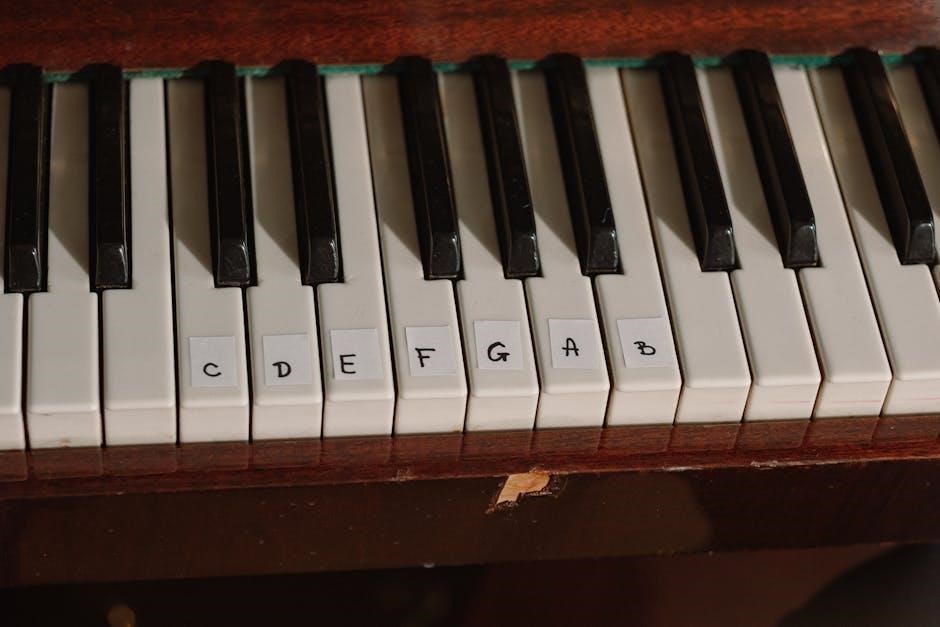
Pay close attention to the arpeggiated sections. Utilizing a consistent fingering pattern – such as 1-2-3-5 – can streamline these passages. Practice slowly, focusing on accuracy before increasing tempo.
Consider the reach required for certain chords. Adjust your hand position slightly to avoid stretching or straining. Prioritize comfort and efficiency for sustained playing.
Pedal Usage
The sustain pedal is crucial for creating the atmospheric and flowing quality of “River Flows in You.” However, overuse can result in a muddy sound, obscuring the delicate harmonies. Careful coordination is key.
Generally, change the pedal with each harmonic change, or slightly before, to maintain clarity. Listen attentively to avoid blurring the individual notes within the arpeggios.
Experiment with half-pedaling techniques – partially depressing the pedal – to achieve subtle gradations of sustain. This adds nuance and prevents abrupt cutoffs.
Observe the sheet music for pedal markings, if provided. These serve as a starting point, but feel free to adjust based on your interpretation and the acoustics of your instrument and room.
Practice slowly, focusing on synchronizing pedal changes with your hand movements to develop a seamless and expressive performance.
Common Challenges for Pianists
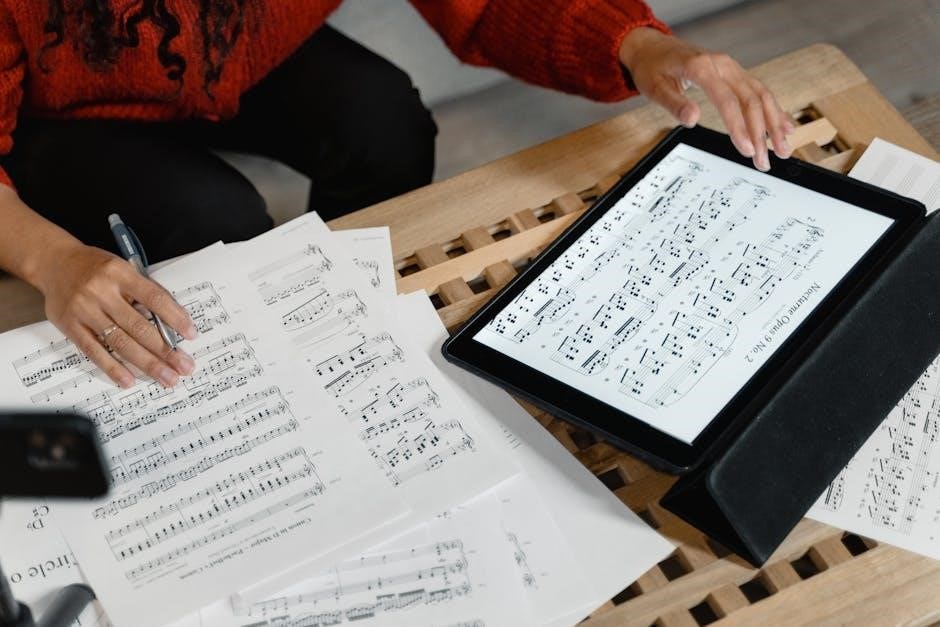
“River Flows in You” presents several challenges, even for intermediate pianists. Maintaining a consistent tempo throughout the piece is a frequent hurdle, as the flowing arpeggios can easily rush or drag.
Achieving the desired emotional expression requires careful attention to dynamics and phrasing. The piece isn’t merely about playing the notes correctly; it’s about conveying a sense of longing and tranquility.

The repetitive nature of the arpeggios can lead to fatigue and a loss of focus. Practicing in short, concentrated bursts can help maintain accuracy and musicality.
Coordinating both hands independently, while simultaneously managing the sustain pedal, demands significant dexterity and coordination.
Overcoming these challenges requires patience, focused practice, and a willingness to experiment with different interpretations.
Maintaining Consistent Tempo
A primary challenge in “River Flows in You” is upholding a steady tempo throughout its duration. The piece’s arpeggiated structure, while beautiful, can easily lead to unintentional accelerations or decelerations.
Utilizing a metronome during practice is crucial. Start at a slower tempo and gradually increase it as accuracy improves. Focus on internalizing the beat, rather than relying solely on the metronome’s clicks.
Subdivide the beats mentally, especially during complex passages. This helps maintain a sense of rhythmic stability.
Record yourself playing and listen critically for tempo fluctuations. This provides valuable feedback and identifies areas needing improvement.
Practice with a consistent, relaxed posture and breathing pattern, as tension can disrupt the flow and affect tempo control.
Achieving Emotional Expression
“River Flows in You” thrives on conveying a sense of delicate emotion and introspection. Simply playing the notes correctly isn’t enough; imbuing the piece with feeling is paramount.
Pay close attention to dynamics. Yiruma’s score utilizes subtle shifts in volume to create nuance. Practice controlling your touch to produce a wide range of tones.
Use phrasing to shape the musical lines. Think of the melody as a vocal line, breathing and flowing naturally.
Experiment with rubato – a slight pushing and pulling of the tempo – to add expressiveness, but do so tastefully and avoid disrupting the overall flow.
Connect with the piece’s melancholic mood. Visualize imagery or emotions that resonate with the music to enhance your interpretation.
Legality and Copyright Considerations

When sourcing “River Flows in You” sheet music, understanding copyright is crucial. Yiruma’s composition is protected by copyright law, meaning unauthorized reproduction and distribution are illegal.
Many free PDF sources online may offer illegally copied sheet music. Utilizing these resources poses ethical and legal risks, potentially leading to copyright infringement.
Purchasing sheet music from reputable websites or authorized retailers ensures you’re obtaining a legal copy, supporting the composer and respecting intellectual property rights.
Public domain refers to works no longer under copyright, but “River Flows in You” is not currently in the public domain.
Always respect copyright laws and choose legitimate sources to enjoy and share this beautiful piece responsibly.
Public Domain vs. Copyrighted Material
Understanding the difference between public domain and copyrighted material is vital when seeking sheet music. Public domain works are free to use, copy, and distribute without permission, as copyright has expired.
However, “River Flows in You” by Yiruma remains firmly under copyright protection. This means the composer retains exclusive rights to the composition, including its reproduction in sheet music form.
Downloading or sharing unauthorized copies of copyrighted sheet music constitutes infringement, potentially leading to legal consequences.
Copyright duration varies by country, but generally extends for the life of the composer plus a significant number of years.
Always verify the copyright status before using any sheet music, and prioritize legally obtained resources to support artists and respect intellectual property.
Ethical Use of Sheet Music
Even when legally obtained, using “River Flows in You” sheet music ethically is crucial. Purchasing sheet music directly supports Yiruma and encourages continued musical creation.
Avoid unauthorized distribution or sharing of purchased PDFs, respecting the composer’s rights and the investment of others.
If using sheet music for public performance, be aware of performance licensing requirements, which may necessitate obtaining permission from copyright holders.
Consider the impact of free, potentially illegal, downloads on the music industry and the livelihoods of musicians.
Promote a culture of respect for intellectual property by advocating for legal sheet music sources and discouraging piracy. Ethical consumption ensures a vibrant musical landscape for all.
Software for Viewing and Editing PDF Sheet Music

Numerous software options enhance the “River Flows in You” sheet music experience. Adobe Acrobat Reader is a standard for basic PDF viewing, offering zoom and annotation features.
For more advanced editing, consider MuseScore, a free, open-source notation software capable of importing and modifying PDFs (though conversion may require adjustments).
Alternatively, ForScore is a popular iOS app designed specifically for sheet music, offering organization, annotation, and page-turning capabilities;
Newzik is another excellent option, providing similar features with cross-platform compatibility.
These tools allow pianists to customize sheet music, add fingerings, and mark dynamics, facilitating a more personalized and effective learning process for Yiruma’s beautiful composition.
Exploring “River Flows in You” sheet music unlocks a world of piano artistry. This guide navigates the landscape of available resources, from free PDF downloads to professionally arranged versions.
Understanding the nuances of sheet music notation – key signatures, time signatures, and dynamic markings – is crucial for accurate interpretation.
Whether you’re a beginner or an advanced pianist, tailored arrangements exist to suit your skill level, ensuring a rewarding learning experience.
We’ll delve into technical aspects like hand positioning, pedaling, and common challenges, empowering you to master Yiruma’s iconic piece.
Finally, we’ll address copyright considerations and ethical usage of sheet music, promoting responsible musical practice.