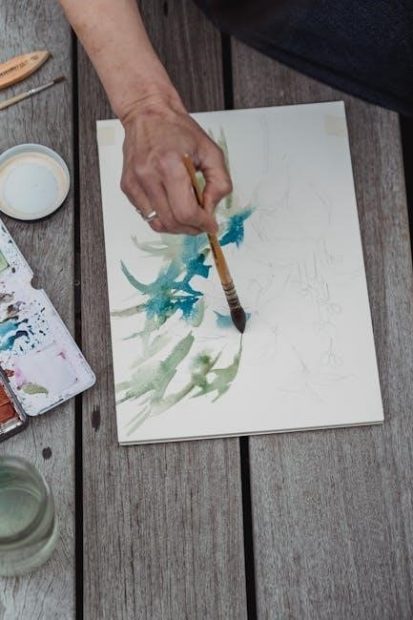
The Basics of Watercolour Painting
Exploring watercolour’s foundations involves discovering techniques through readily available PDF resources, offering guidance from beginner exercises to advanced methods for artists and illustrators.
Domestika’s free PDF, crafted by Inga Buividavice, presents valuable exercises focused on mastering colour application, enhancing your artistic skillset and understanding.
Life i design provides free tutorials and a downloadable PDF, ideal for beginners, covering supplies, mixing, and practicing simple floral and leaf compositions.
Reddit’s shared resource links to a comprehensive list, catering to all skill levels, from foundational techniques to more complex approaches in watercolour painting.
Understanding Watercolour
Watercolour’s unique character stems from its transparency and fluidity, demanding a different approach than opaque mediums. Mastering this requires dedicated study, and fortunately, numerous PDF resources are available to guide artists through the intricacies of the medium.
Resources like those found on DOKUMEN.PUB, extracted from books like “Watercolor Techniques for Artists and Illustrators,” detail the fundamental principles. These guides cover everything from understanding paint properties to selecting appropriate supports, laying a solid foundation for success.
Beginner-focused PDFs, such as those offered by Nicki Traikos on Life i design, emphasize the importance of practice with basic techniques. These tutorials often include exercises for colour mixing and simple subject rendering, building confidence and skill.
The wealth of free links shared on Reddit provides access to a diverse range of learning materials. These resources collectively illuminate the nuances of watercolour, empowering artists to explore its potential and develop their individual style through focused practice and exploration of techniques.
Watercolour Paint Types
Watercolour paints are categorized primarily by their pigment concentration and form, influencing their handling and vibrancy. PDF guides, like those detailed in “Watercolor Techniques for Artists and Illustrators” (DOKUMEN.PUB), explain the distinctions between pan, tube, and liquid watercolour.
Pan watercolours, convenient and portable, offer a more controlled application due to their semi-dried nature. Tube watercolours, containing a higher pigment load, provide intense colour and are ideal for larger washes and detailed work.
Liquid watercolours, often used for illustrative purposes, offer exceptional fluidity and are well-suited for techniques like staining and layering. Understanding these differences is crucial, and resources like those on Reddit compile links to explain these nuances.
Free tutorials and downloadable PDFs (Life i design) often demonstrate how different paint types behave, helping artists choose the best medium for their desired effects and artistic vision, ultimately enhancing their watercolour journey.
Other Water-Based Media (Comparison)
Comparing watercolour to other water-based media, such as gouache and acrylics, reveals distinct characteristics impacting technique and outcome. PDF resources, like those found on Domestika and detailed in “Watercolor Techniques for Artists and Illustrators”, highlight these differences.
Gouache, also water-soluble, offers opacity and a matte finish, unlike watercolour’s transparency. Acrylics, once dry, become water-resistant, allowing for layering without lifting previous colours – a key difference from watercolour’s re-wettable nature.
Free tutorials (Life i design) often demonstrate how to achieve effects similar to gouache or acrylic using watercolour techniques, such as layering and adding masking fluid. Reddit’s shared links provide further insight into the unique properties of each medium.
Understanding these distinctions empowers artists to choose the most appropriate medium for their artistic goals, or to creatively combine them, expanding their expressive possibilities and artistic toolkit.
Paper and Supports for Watercolour
Selecting the right paper is crucial for successful watercolour painting, influencing how pigments flow and blend. PDF guides, including “Watercolor Techniques for Artists and Illustrators”, emphasize the importance of paper weight and surface texture.
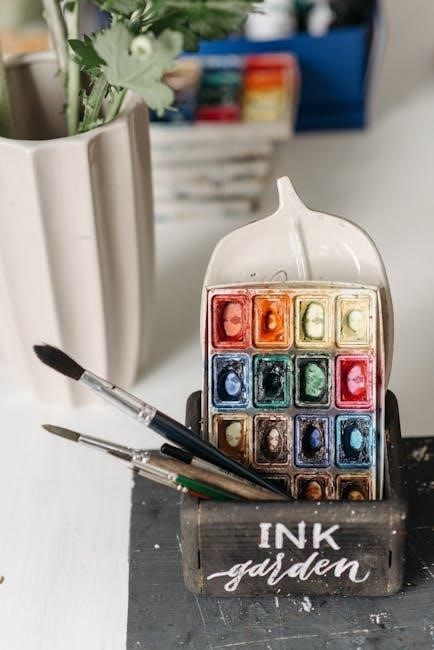
Hot-pressed paper offers a smooth surface, ideal for detailed work and fine lines, while cold-pressed paper provides a textured surface, enhancing granulation effects. Rough paper exhibits the most texture, creating dramatic washes and expressive marks.
Paper weight, measured in pounds or grams per square meter (gsm), determines its ability to withstand water without buckling. Tutorials (Life i design) often recommend 140lb (300gsm) paper for beginners to minimize warping.
Beyond paper, supports like watercolour canvas and Yupo paper offer unique alternatives. Resources shared on Reddit highlight experimentation with different supports to achieve varied effects and expand artistic horizons.
Essential Brushes for Watercolour
Choosing the right brushes is fundamental to mastering watercolour techniques. PDF resources, like those found through Domestika and referenced on Reddit, detail brush shapes, sizes, and hair types for diverse effects.
Round brushes are versatile, ideal for detail work, washes, and lines. Flat brushes excel at broad washes and creating sharp edges. Filbert brushes combine the benefits of both, offering rounded edges for soft blending.
Brush hair types – sable, synthetic, and squirrel – impact paint handling. Sable brushes hold significant water and pigment, while synthetic brushes are more affordable and durable. Tutorials emphasize experimenting to find preferred brushes.
“Watercolor Techniques for Artists and Illustrators” likely covers brush care, emphasizing cleaning and shaping to prolong brush life. Beginner guides suggest starting with a small selection of round and flat brushes in various sizes.
Applying Watercolour Paint
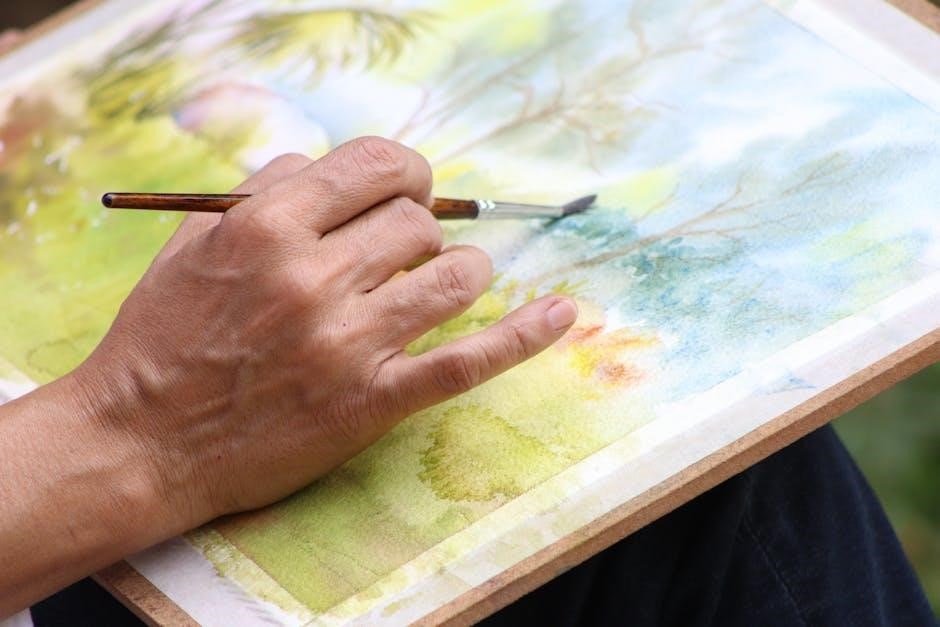
PDF guides detail applying paint using pencils, pens, and mediums, alongside observational skill development, perspective, and composition techniques for stunning results.
Sketching and planning are crucial, as demonstrated in free tutorials, preparing surfaces for watercolour application and enhancing artistic expression.
Pencils, Pens, and Mediums in Watercolour
Utilizing preliminary sketches with pencils forms a foundational step, as highlighted in various watercolour techniques PDF resources, providing structure before applying washes.
PDF guides demonstrate how different pencil grades impact the final artwork, influencing line weight and the potential for lift-out effects when combined with watercolour.
Waterproof pens, often recommended in tutorials, allow for detailed linework that resists bleeding when watercolour is applied, creating crisp contrasts and defined shapes.
Masking fluid, a valuable medium, protects areas of the paper from paint, enabling intricate details and preserving white space, as showcased in instructional PDFs.
Watercolour mediums, like ox gall or gum arabic, modify paint properties – ox gall increases flow, while gum arabic enhances transparency and liftability, expanding creative possibilities.
Experimentation with these tools, guided by PDF exercises, unlocks unique textures and effects, allowing artists to personalize their watercolour approach and achieve desired outcomes.
Combining these elements thoughtfully, as detailed in online resources, elevates watercolour paintings, adding depth, complexity, and artistic flair to each composition.
Developing Observational Skills
Sharpening observational abilities is crucial for successful watercolour painting, and numerous watercolour techniques PDF guides emphasize this foundational skill.
PDF resources advocate for careful study of subjects – light, shadow, form, and colour – before attempting to translate them onto paper, fostering accuracy.
Exercises within these guides often involve blind contour drawing, encouraging artists to focus solely on the subject’s edges, improving hand-eye coordination.
Value studies, detailed in PDF tutorials, help understand tonal relationships, enabling realistic rendering of light and shadow in watercolour landscapes or still lifes.
Breaking down complex forms into simpler shapes, a technique highlighted in online resources, simplifies the painting process and enhances compositional clarity.
Practicing negative painting, as demonstrated in instructional PDFs, trains the eye to perceive shapes defined by surrounding space, improving accuracy and detail.
Consistent practice, guided by these resources, cultivates a keen eye for detail, enabling artists to capture the essence of their subjects with greater fidelity.
Perspective and Composition in Watercolour
Mastering perspective and composition significantly elevates watercolour paintings, and several watercolour techniques PDF guides dedicate sections to these principles.
PDF resources explain linear perspective – one, two, and three-point – demonstrating how to create realistic depth and spatial relationships within a scene.
Compositional guidelines, like the rule of thirds, leading lines, and creating focal points, are detailed in tutorials, enhancing visual impact and balance.
Understanding atmospheric perspective, often covered in advanced PDFs, teaches artists to convey distance through colour and value shifts, adding realism.
Thumbnail sketches, a recommended exercise in online resources, help explore different compositional arrangements before committing to a final painting.
Negative space, discussed in instructional PDFs, is utilized to create dynamic compositions and draw attention to the subject matter effectively.
Applying these principles, guided by these resources, results in more compelling and visually harmonious watercolour paintings with a strong sense of depth.
Drawing Basics for Watercolourists
Solid drawing skills form the foundation for successful watercolour painting, and many watercolour techniques PDF guides begin with these fundamentals.
Basic shapes and forms – cubes, spheres, cylinders – are emphasized in introductory PDFs, teaching artists to construct objects accurately before applying paint.
Line quality is crucial; resources demonstrate varying line weights to create depth, texture, and visual interest in preliminary sketches.
Understanding value and shading, often covered in detail, helps build form and create realistic lighting effects before watercolour application.
Proportion and anatomy, though potentially advanced, are touched upon in comprehensive PDFs, especially for painting figures or animals.
Light sketching is recommended; tutorials advise using a light hand to avoid damaging the watercolour paper and allow for easy corrections.
Practicing these drawing basics, guided by these resources, significantly improves the accuracy and overall quality of watercolour paintings.
Sketching and Planning Your Watercolour Painting
Effective planning is paramount in watercolour, and watercolour techniques PDF resources dedicate sections to preliminary sketching and composition.
Thumbnail sketches are frequently recommended; these small, quick studies help explore different compositions and value arrangements before committing to a larger painting.
Lightly sketching the main shapes onto the watercolour paper is advised, ensuring the lines are faint enough to be painted over without showing through.
Considering the focal point and arranging elements to draw the viewer’s eye is a key aspect covered in many instructional PDFs.
Mapping out values – light, medium, and dark areas – in the sketch helps visualize the final painting’s tonal range and create depth.
Planning colour palettes beforehand, often with colour swatches, ensures harmonious and intentional colour choices in the finished artwork.
These planning stages, detailed in various guides, minimize errors and maximize the impact of the final watercolour painting.
Colour Theory for Watercolour
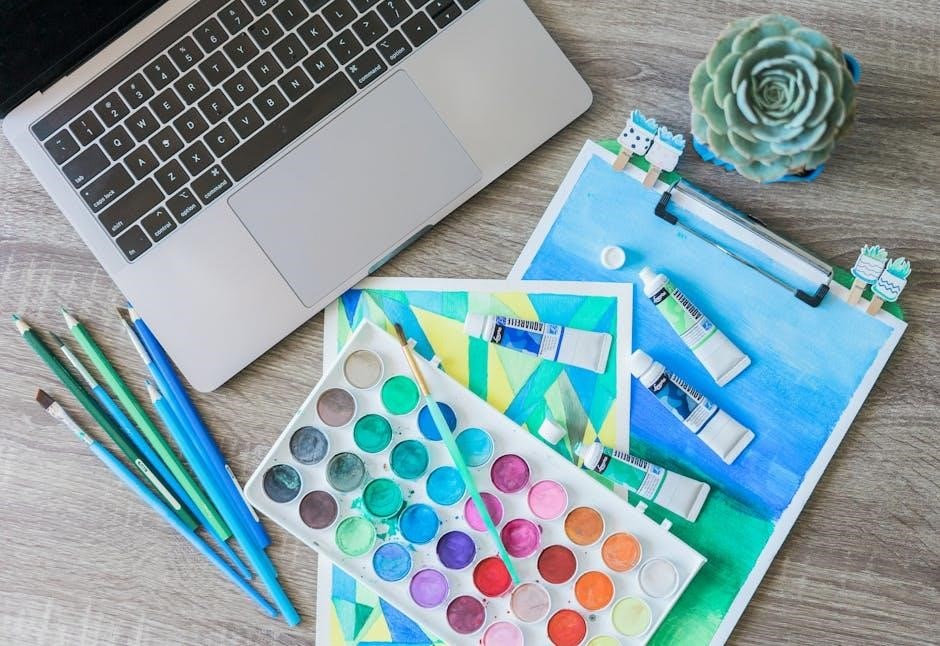
Understanding colour’s properties is vital, and PDF guides detail colour mixing, palette selection, and how these elements interact within watercolour techniques.
Domestika’s PDF emphasizes exercises for working with colour, while resources highlight intentional colour choices for impactful watercolour paintings.
Properties of Colour in Watercolour
Delving into watercolour’s unique characteristics requires understanding how pigment behaves differently than other mediums, a concept often explored within comprehensive PDF guides.
Transparency is key; watercolour’s luminosity stems from light interacting with the white of the paper through successive layers of paint, a technique detailed in many tutorials.
Granulation, the textured effect created by certain pigments separating as they dry, adds visual interest and is showcased in exercises found in downloadable resources.
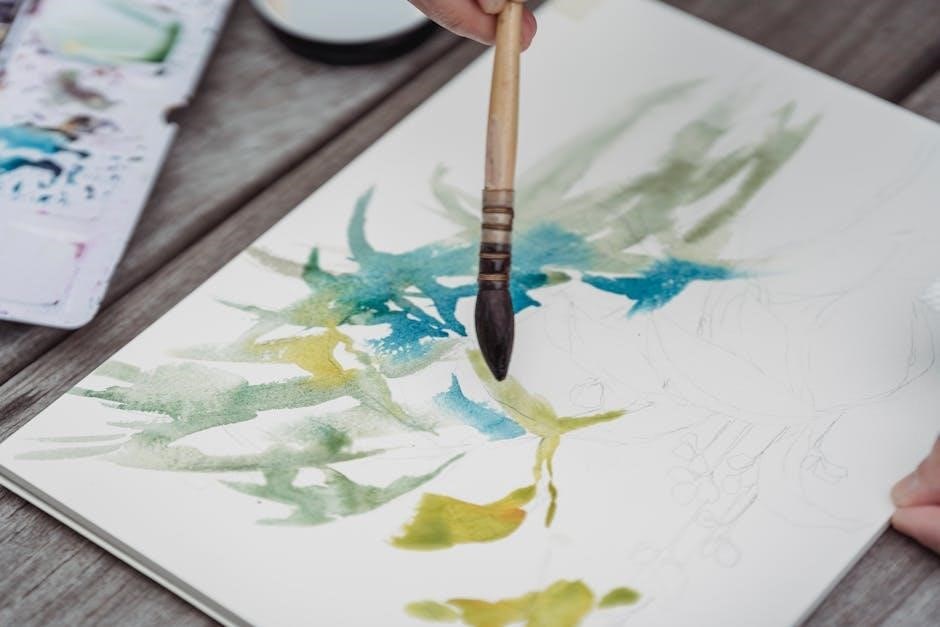
Staining refers to pigments that deeply penetrate the paper fibres, making lifting colour difficult – a property artists must consider when planning their work, as explained in PDFs.
Domestika’s free PDF, by Inga Buividavice, implicitly addresses these properties through practical exercises, encouraging observation of how colours interact and settle on the paper.
Understanding these properties – transparency, granulation, and staining – is fundamental to controlling watercolour and achieving desired effects, as demonstrated in various online resources and PDFs.
Mastering these nuances allows artists to leverage watercolour’s inherent qualities, creating depth, texture, and vibrant, expressive paintings.
Colour Mixing Techniques
Effective colour mixing in watercolour hinges on understanding how pigments interact, a skill honed through practice and guidance found in numerous PDF tutorials.
Limited palettes are often recommended for beginners, encouraging exploration of colour relationships and preventing muddy mixtures, a concept frequently covered in introductory PDFs.
Glazing – layering transparent washes – is a core technique for achieving depth and complex colours, demonstrated in step-by-step guides available online and in downloadable resources.
Wet-in-wet mixing creates soft, blended transitions, ideal for skies and backgrounds, while wet-on-dry offers greater control for precise colour placement, as illustrated in technique PDFs.
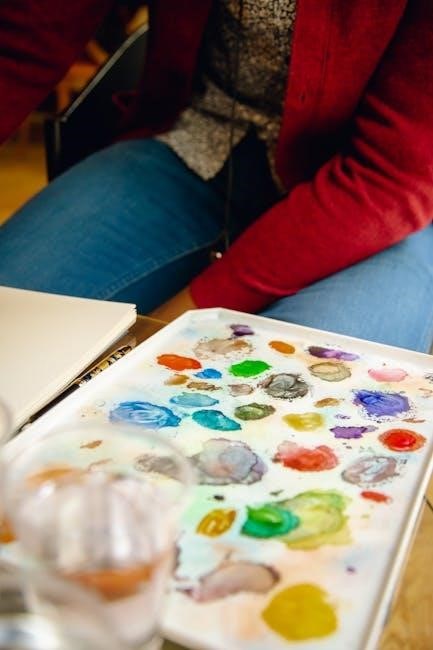
Life i design’s free tutorial and PDF provide a foundation for mixing basic colours, empowering beginners to create a wider range of hues from a limited selection.
Domestika’s exercises implicitly teach colour mixing through practical application, encouraging experimentation and observation of colour interactions on the paper.
Consistent practice, guided by these resources, unlocks the potential for nuanced and expressive colour mixing in watercolour painting.
Choosing a Watercolour Palette
Selecting a watercolour palette is a personal journey, influenced by artistic style and preferred techniques, with guidance available through various PDF resources.
Pan sets offer convenience and portability, ideal for plein air painting and beginners, while tube paints provide greater pigment concentration and mixing flexibility, often detailed in technique guides.
Limited palettes, featuring a curated selection of colours, are frequently recommended in introductory PDFs to simplify colour mixing and foster understanding of colour relationships.
Consider pigment quality; artist-grade paints offer superior lightfastness and vibrancy compared to student-grade options, a crucial factor discussed in comprehensive watercolour PDFs.
Life i design’s resources implicitly suggest starting with a basic palette, allowing artists to build their collection as their skills and preferences evolve.
Experimentation is key; exploring different palettes and colour combinations will reveal what best suits your artistic vision, a process supported by online tutorials and PDFs.
Ultimately, the ideal palette is one that inspires creativity and facilitates the expression of your unique artistic voice.
Your Watercolour Painting Setup
Establishing a dedicated watercolour painting setup enhances the creative process, and resources like downloadable PDF guides can streamline preparation.
Essential components include a sturdy surface, appropriate lighting, watercolour paints, brushes, paper, water containers, and a palette for mixing colours – all frequently detailed in technique PDFs.
Paper selection is crucial; watercolour paper’s weight and texture significantly impact the painting’s outcome, with guides offering insights into different types.
Organizing your workspace promotes efficiency; keeping supplies readily accessible minimizes interruptions and fosters a focused painting session.
Life i design’s tutorials implicitly emphasize the importance of having the right materials on hand to practice techniques effectively.
Consider ergonomics; a comfortable setup prevents strain and allows for extended painting sessions, maximizing creative flow.
A well-organized setup, informed by technique PDFs, empowers artists to fully immerse themselves in the joy of watercolour painting.
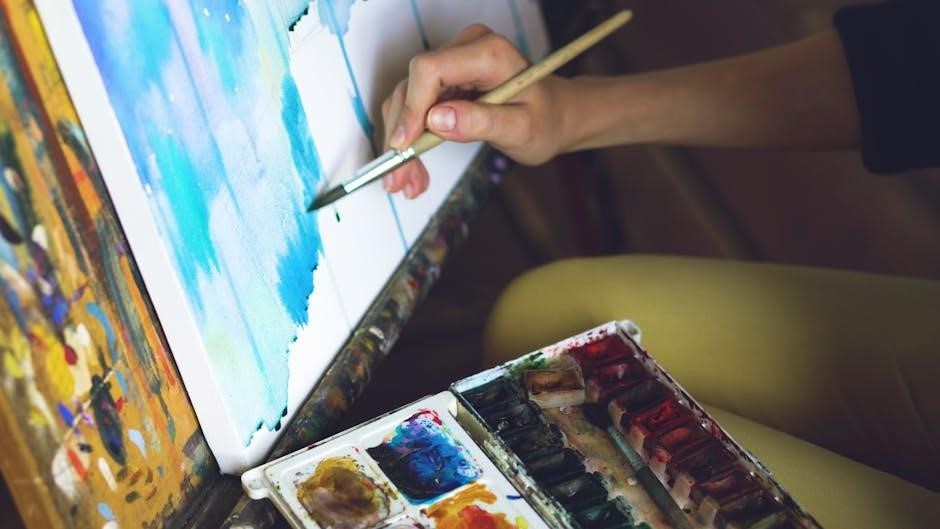
Watercolour Techniques
Mastering watercolour techniques is facilitated by numerous PDF resources, detailing methods like wet-on-wet, dry brush, layering, and washes for artistic expression.
Domestika’s PDF offers exercises to refine skills, while Life i design provides tutorials for beginners to explore fundamental techniques effectively.
Embarking on a watercolour journey requires understanding fundamental techniques, readily accessible through various PDF guides and online tutorials designed for artists of all levels.
These resources comprehensively cover essential methods, including the foundational wet-on-wet and wet-on-dry approaches, allowing for blending and layering of colours to achieve desired effects.
Further exploration reveals techniques like dry brushing, ideal for creating textured details, and mastering washes – flat, graduated, and variegated – to establish tonal foundations.
Domestika’s free PDF, featuring exercises by Inga Buividavice, provides a structured approach to colour work, while Life i design offers beginner-friendly tutorials and a downloadable guide.
Reddit’s shared link compiles a wealth of resources, from introductory concepts to advanced techniques, ensuring a continuous learning path for aspiring watercolourists.
Understanding these techniques, as detailed in available PDFs, unlocks the potential for creating diverse and captivating watercolour paintings, from landscapes to portraits.
Beginner Watercolour Techniques
Starting with watercolour involves mastering a few core techniques, conveniently outlined in numerous PDF tutorials geared towards newcomers to the medium.
Essential beginner techniques include the wet-on-dry method for controlled washes, and the wet-in-wet approach for soft, blended effects – both detailed in accessible guides.
Learning to layer paint gradually builds depth and complexity, while practicing flat washes establishes foundational colour blocks, as demonstrated in available resources.
Life i design’s free PDF provides a perfect starting point, offering simple exercises for leaves and flowers, ideal for building confidence and skill.
Domestika’s PDF, by Inga Buividavice, focuses on colour exercises, enhancing understanding of pigment behaviour and mixing capabilities.
Reddit’s compiled list offers a comprehensive overview, guiding beginners through fundamental concepts and providing links to further learning materials in PDF format.
Wet-on-Dry Technique
The wet-on-dry technique, a cornerstone of watercolour painting, involves applying wet paint to dry paper, offering precise control and defined edges – a skill detailed in various PDF guides.
This method is ideal for creating sharp details, layering colours without blending, and building up textures gradually, as demonstrated in beginner-friendly tutorials.
Resources like those found on Reddit, through shared links, often showcase examples of wet-on-dry application in landscapes and illustrative work.
PDF tutorials emphasize the importance of paper quality, as the dry surface influences paint flow and absorption, impacting the final result.
Life i design’s free PDF, while covering broader techniques, implicitly supports wet-on-dry through its exercises in controlled brushwork and detail.
Domestika’s colour exercises, presented in their PDF, benefit from the precision offered by the wet-on-dry approach, allowing for accurate colour placement.
Wet-in-Wet Technique
The wet-in-wet technique, a hallmark of watercolour’s fluidity, involves applying paint to already dampened paper, creating soft edges and organic blends – a skill frequently detailed in PDF resources.
This method excels at depicting atmospheric effects, skies, and backgrounds, allowing colours to mingle and flow naturally, as showcased in illustrative tutorials.
Shared links on Reddit often point to demonstrations of wet-in-wet for creating loose, expressive washes and impressionistic landscapes.
PDF guides stress the importance of controlling the paper’s wetness; too wet, and colours become uncontrollable, too dry, and the effect is lost.
Life i design’s free PDF, while focusing on basics, provides a foundation for understanding how water interacts with pigment, crucial for wet-in-wet.
Domestika’s colour exercises, within their downloadable PDF, can be enhanced by utilizing the wet-in-wet technique to explore colour blending and gradients.
Dry Brush Technique
The dry brush technique, a contrasting approach to wet-in-wet, utilizes minimal water, dragging a relatively dry brush across textured paper to create broken colour, texture, and detail – often illustrated in PDF tutorials.
This method is ideal for depicting rough surfaces like bark, stone, or weathered wood, offering a granular, expressive quality that’s hard to achieve otherwise.
Resources shared on Reddit frequently demonstrate dry brush for adding highlights, creating foliage texture, and suggesting form with minimal paint.
PDF guides emphasize using quality paper with a noticeable tooth, as this is essential for the brush to catch and deposit pigment effectively.
While not explicitly detailed, understanding pigment load, as taught in beginner PDFs like those from Life i design, is crucial for successful dry brush work.
Domestika’s exercises, when applied with a drier brush, can showcase how texture and broken colour contribute to a painting’s overall impact and realism.
Layering Paint in Watercolour
Layering, or glazing, is a fundamental watercolour technique detailed in numerous PDF guides, building depth and complexity by applying transparent washes over dried underlayers.
This process allows for subtle colour mixing and the creation of rich, luminous effects, as each layer modifies the colours beneath, enhancing visual interest.
Resources like those found on Reddit often showcase layering for achieving realistic shadows, modelling form, and creating atmospheric perspective.
PDF tutorials emphasize allowing each layer to completely dry before applying the next, preventing unwanted blending and maintaining clarity.
Life i design’s beginner PDFs introduce the concept of light washes, building gradually to darker tones, a core principle of successful layering.
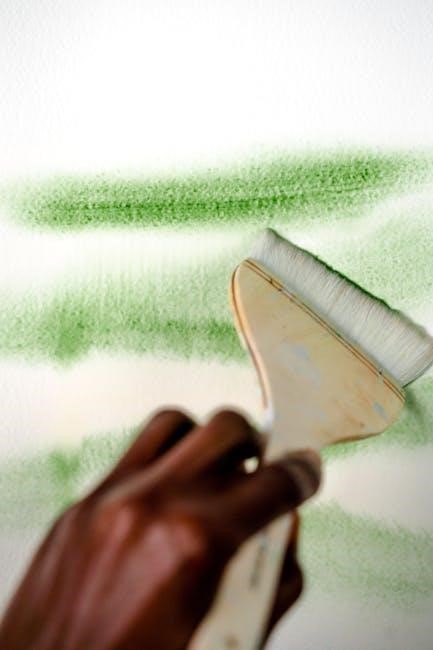
Domestika’s exercises can be adapted to explore layering, demonstrating how colour interactions and successive washes contribute to a painting’s final depth.
Alla Prima Watercolour Painting
Alla Prima, meaning “at first attempt,” is a direct painting method often explored in watercolour PDF tutorials, emphasizing speed and spontaneity, completing a painting in a single session.
Unlike layering, Alla Prima requires confident brushwork and a clear understanding of values and colour mixing, as corrections are difficult once paint is applied.
Resources shared on Reddit highlight the importance of pre-mixing colours and working quickly to capture the essence of a subject before the paper dries.
PDF guides often demonstrate how to achieve soft edges and blended transitions through wet-in-wet techniques within the Alla Prima approach.
The “Watercolor Techniques for Artists and Illustrators” book, referenced in DOKUMEN.PUB, likely contains sections dedicated to this expressive method.
Beginner PDFs may suggest starting with smaller studies to practice the immediacy and decisiveness required for successful Alla Prima watercolour painting.
Tone and Value in Watercolour
Understanding tone and value is crucial in watercolour painting, and many PDF resources dedicate sections to mastering these foundational elements for creating depth and realism.
Value refers to the lightness or darkness of a colour, while tone encompasses both value and colour temperature, influencing the mood and form within a painting.
“Watercolor Techniques for Artists and Illustrators” (DOKUMEN.PUB) likely details exercises for practicing value scales and observing tonal relationships in subjects.
Domestika’s free PDF by Inga Buividavice likely includes exercises focused on working with colour to achieve a range of values, enhancing visual impact.
Beginner tutorials emphasize building up values gradually through layering washes, creating subtle transitions and avoiding harsh contrasts initially.
Reddit’s shared links point to resources that demonstrate how to use value to define form, create atmospheric perspective, and guide the viewer’s eye.
Using Runbacks in Watercolour
Runbacks, a distinctive watercolour technique, involve allowing paint to flow back into a previously painted area, creating textured effects and interesting patterns. PDF guides often dedicate sections to mastering this nuanced skill.
“Watercolor Techniques for Artists and Illustrators” (DOKUMEN.PUB) likely showcases how to control runbacks by tilting the paper and manipulating the paint’s consistency.
Beginner tutorials emphasize practicing runbacks on scrap paper to understand how different pigments and paper surfaces react to this technique.
The technique is particularly effective for depicting natural elements like foliage, rocks, or water, adding organic texture and visual interest.
Controlling runbacks requires careful timing and understanding of paint flow; resources often suggest using a limited palette initially for better control.
Reddit’s shared links likely point to demonstrations of runback techniques, offering visual examples and tips for achieving desired effects in watercolour paintings.
Flat Wash Technique
The flat wash, a foundational watercolour technique, involves applying a single, even layer of colour across a defined area. PDF resources consistently highlight its importance for backgrounds, skies, and large colour fields.
“Watercolor Techniques for Artists and Illustrators” (DOKUMEN.PUB) likely details achieving a smooth flat wash through consistent brushstrokes and appropriate paint dilution.
Beginner tutorials emphasize using a large brush, tilting the paper slightly, and maintaining a wet edge to prevent hard lines or unevenness.
Successful flat washes require practice in controlling paint flow and avoiding puddles, which can lead to unwanted blooms or variations in colour.
Life i design’s PDF may offer exercises specifically designed to build proficiency in creating consistent, even washes with watercolour paints.
Reddit’s shared links likely include demonstrations and troubleshooting tips for common issues encountered when attempting a flat wash technique.
Graduated Wash Technique
The graduated wash, a versatile watercolour technique, creates a smooth transition from dark to light tones within a single application. PDF guides often showcase its use for depicting skies, landscapes, and subtle shading effects.
“Watercolor Techniques for Artists and Illustrators” (DOKUMEN.PUB) likely illustrates how to achieve this by gradually adding water to the paint mixture as you move across the paper.
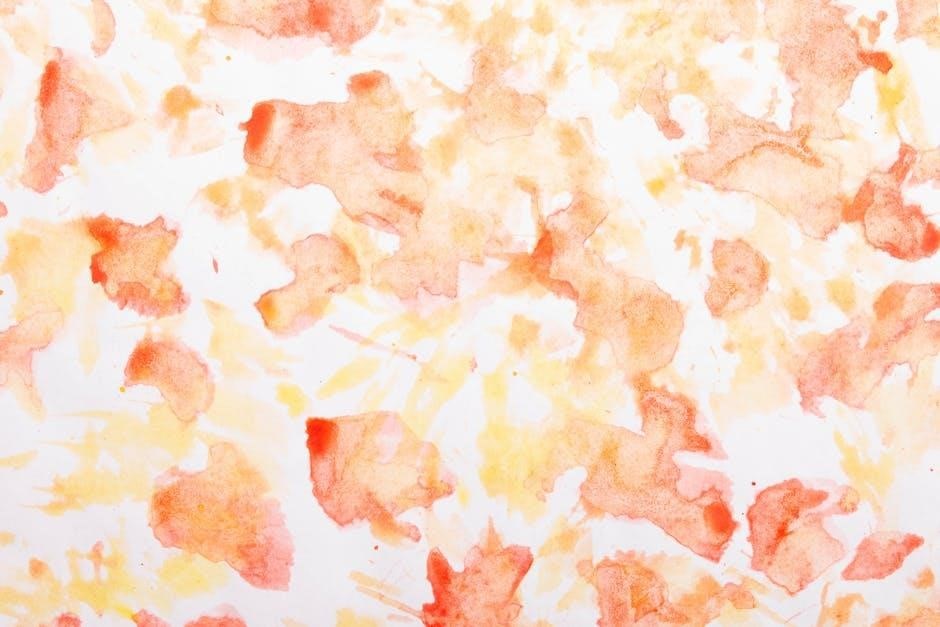
Beginner resources emphasize maintaining a consistent brushstroke and overlapping each stroke slightly to blend the tones seamlessly.
Mastering the graduated wash requires careful control of paint consistency and an understanding of how water affects pigment distribution.
Free tutorials, like those from Life i design, may provide step-by-step demonstrations and practice exercises for this technique.
Reddit’s shared links likely offer diverse approaches and troubleshooting advice for achieving a flawless graduated wash effect.
Variegated Wash Technique
The variegated wash technique introduces captivating complexity to watercolour paintings, creating mottled, textured effects resembling natural surfaces like stone or wood. PDF resources frequently demonstrate its application in landscape and abstract work.
“Watercolor Techniques for Artists and Illustrators” (DOKUMEN.PUB) likely details how to drop different colours into a wet wash, allowing them to blend and mingle organically.
Successful execution relies on controlling the wetness of the paper and the fluidity of the paints, encouraging unpredictable yet harmonious colour interactions.
Beginner guides often suggest experimenting with complementary or analogous colours to achieve visually appealing variations.
Free tutorials, such as those found via Reddit’s shared links, may showcase specific colour combinations and application methods.
Domestika’s PDF could offer exercises focused on mastering colour control and embracing the spontaneous nature of this expressive technique.
Line and Wash Combination
The line and wash technique beautifully merges the precision of ink drawing with the fluidity of watercolour, offering a versatile approach to illustration and sketching. PDF guides often highlight its suitability for urban sketching and botanical art.
“Watercolor Techniques for Artists and Illustrators” (DOKUMEN.PUB) likely demonstrates how to create a detailed ink outline before applying washes of colour, enhancing form and detail.
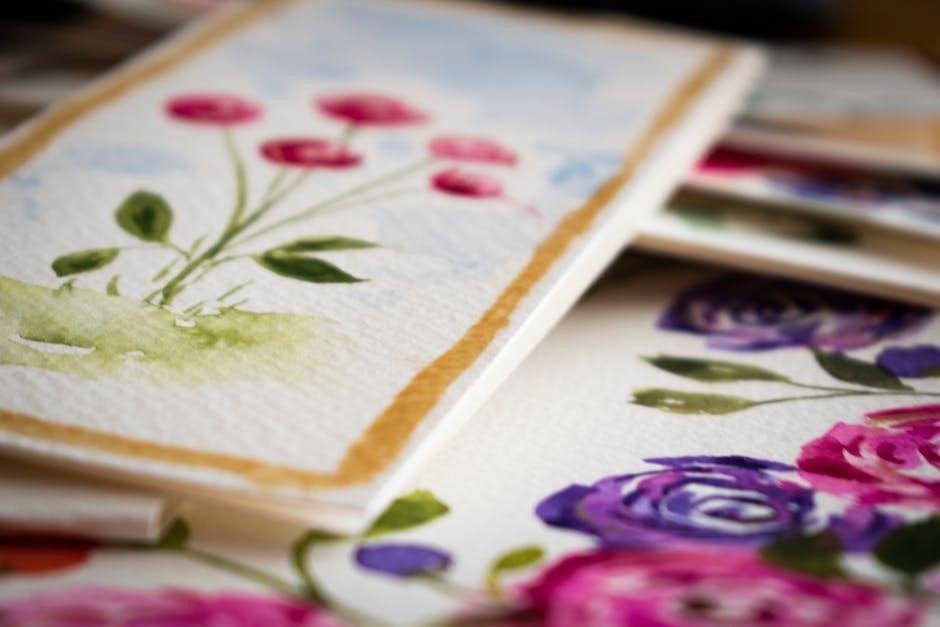
This method allows for expressive linework to define shapes, while watercolour adds depth, texture, and atmospheric effects.
Beginner resources emphasize using waterproof ink to prevent bleeding when watercolour is applied.
Free tutorials, shared on platforms like Life i design and Reddit, may showcase different ink types and wash application techniques.
Domestika’s PDF could include exercises focused on coordinating linework and colour to achieve harmonious and dynamic compositions.